
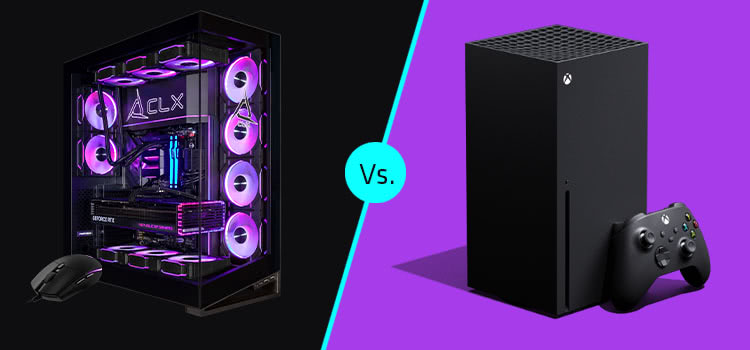
Newzoo’s latest PC & Console Gaming Report, released this week at GDC, projects that PC gaming revenue will surpass console revenue by the end of 2028 — ending more than a decade of console financial leadership. The headline figure commands attention, but the underlying mechanics of the shift carry far more strategic weight for investors and publicly listed game developers.
THE GROWTH DIFFERENTIAL
Newzoo forecasts PC revenue to expand at a compound annual growth rate of 6.6% between 2025 and 2028, compared with 4.4% for consoles. On a combined market that closed 2025 at $88.3 billion and is projected to reach $103.7 billion by 2028, that spread is material. The console market continues to grow — it simply does so at a structurally slower pace. For equity analysts modelling publisher revenue mixes, the implication is a gradual but irreversible shift in platform weighting.
TWO ENGINES DRIVING THE PC SURGE
Geography is the first and arguably more consequential driver. China’s PC gaming population expanded 11.7% year-on-year in 2025, and East Asia broadly is accelerating through storefront adoption. For a publicly listed developer, this represents a total addressable market opportunity that console hardware cannot replicate in regions where PlayStation and Xbox maintain negligible penetration. Lower average revenue per user in China is offset by the sheer scale of engagement — a metric that carries direct valuation implications for live-service studios.
Pricing architecture is the second engine. Premium games were the primary PC growth driver in 2025, rising 11.8% year-on-year across AAA, AA, and indie segments — with much of the momentum concentrated in the $30–$50 range. More telling is the sub-$30 category, where the number of titles generating over $5 million in revenue grew from 17 in 2024 to 26 in 2025. That is not margin compression. It is the long tail maturing into a commercially viable segment, offering developers a lower-risk launch window alongside traditional blockbuster positioning. Steam’s record December 2025 — reportedly $1.6 billion in a single month — underlines just how efficiently the platform now converts player volume into revenue.
THE CONSOLE REALITY CHECK
Console is not in structural decline; it is becoming a more concentrated and higher-stakes platform. Revenue remains anchored in annual franchises and premium blockbusters, with titles priced at $50 or above accounting for nearly 80% of console premium spend. The risk embedded in that model is significant: as Newzoo’s Director of Market Intelligence noted, ‘hardware cycles are stretching, development costs are rising, and even proven franchises are no longer guaranteed to succeed.’
The Xbox data point warrants particular scrutiny. PlayStation recorded 81 titles surpassing $5 million in revenue in 2025; Xbox recorded 34. That gap reflects weakening premium software momentum on Microsoft’s platform — a metric that transcends Game Pass cannibalization and raises questions about the broader health of the Xbox software ecosystem.
Subscription revenue across both platforms continued to grow in 2025, though growth was increasingly driven by price increases and tier upgrades rather than net subscriber expansion. That distinction matters for how analysts model future ARPU — it signals a ceiling being approached rather than a runway being extended.
IMPLICATIONS FOR PUBLICLY LISTED DEVELOPERS
The strategic read here is not ‘sell console, buy PC.’ It is that platform agnosticism has become a prerequisite for capital efficiency. A developer shipping day-and-date across Steam, PlayStation, and Xbox captures the full revenue curve and reduces concentration risk. A console-exclusive studio or one heavily dependent on platform-holder relationships is carrying risk that the market will increasingly price accordingly. Capcom’s publicly stated expectation that its PC sales ratio will ‘continue increasing’ is a telling directional signal from one of the sector’s most disciplined capital allocators.
Engagement data reinforces the case for platform diversification. The share of PC playtime generated outside the top 20 titles grew from 33% to 42% between 2022 and 2025 — a structural broadening of the mid-market that creates commercial opportunity for studios outside the upper tier of the AAA bracket.
BOTTOM LINE
This report is a structural map of where monetisation efficiency is migrating. Publishers with multi-platform reach, flexible pricing capabilities, and proven live-service infrastructure are positioned to capture the next growth phase. Those dependent on a single $70 console launch cycle are playing a progressively narrower game. The market will price that distinction — and based on Newzoo’s trajectory data, it will do so sooner than 2028.



That’s a really interesting take, especially considering the rising popularity of esports on PC. It makes sense that the report is highlighting this trend.
Another major problem is that with every new launch, gamers will likely be priced out. PC prices seem to be much more stable as compared to consoles