

Six years ago, NVIDIA launched GeForce Now into a skeptical world. The cloud gaming landscape was littered with broken promises, where latency fears and licensing labyrinths seemed insurmountable.
The Bet That Built a Bridge to the Future
Today, GeForce Now stands not merely as a survivor, but as a foundational pillar in NVIDIA’s empire—a strategic bridge connecting its graphics dominance to the cloud-centric future of play and creation. With over 25 million members and a reputation as the performance leader, GeForce Now’s evolution is a masterclass in strategic adaptation. This is the complete story of how a cloud platform weathered existential storms, became indispensable to gamers, and subtly strengthened the foundations of a $2 trillion company.
The Genesis – A Radical “Bring-Your-Own-Games” Gambit
GeForce Now did not emerge from a vacuum. It evolved from the NVIDIA GRID service, initially a limited beta for Shield devices. NVIDIA’s pivotal, defining decision was to reject the “walled garden” approach of competitors. Instead, GeForce Now embraced a “Bring-Your-Own-Games” (BYOG) model, leveraging users’ existing libraries on Steam, Epic Games Store, GOG, and Ubisoft Connect.
This was a revolutionary risk. It placed immense faith in the player’s desire for library permanence and directly challenged the subscription-library model. While it would later trigger NVIDIA’s greatest crisis, it ultimately established GeForce Now as the most user-centric and practical cloud platform, distinguishing it from the ill-fated Google Stadia.
Technical Sovereignty – The SuperPOD Backbone
The credibility of GeForce Now rests on NVIDIA’s hardware mastery. The platform is powered by custom “SuperPOD” server clusters—dense arrays of data-center-grade GPUs, continuously upgraded from Tesla-based cards to today’s Ada Lovelace RTX 4080s.
This proprietary infrastructure enables what was once cloud fantasy:
True Ray Tracing & DLSS 3.5: Cinematic lighting and AI-frame generation in the cloud.
4K/120 fps & Ultrawide 1440p Streaming: A premium experience rivaling local high-end rigs.
NVIDIA Reflex: Sub-millisecond latency optimization for competitive play.
By offering a technical showcase that often surpasses what’s feasible on affordable consumer hardware, GeForce Now transformed from a compromise into a premium destination.
The Great Content War – Licensing Battles and Strategic Truces
If technology was GeForce Now’s strength, content licensing was its near-fatal vulnerability. The early BYOG assumption—that a personal game license extended to the cloud—collided with publisher sovereignty. The mass exodus of titles from Activision Blizzard, Bethesda, and others in 2020 threatened to hollow out the service.
NVIDIA’s response was a grueling, publisher-by-publisher diplomatic campaign. Key strategic victories turned the tide:
The Microsoft Partnership: Integrating Xbox PC Game Pass titles was a watershed, lending immense legitimacy and a vast catalog.
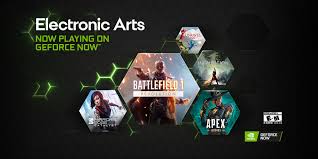
EA App Integration: Returning the entire EA Play portfolio.
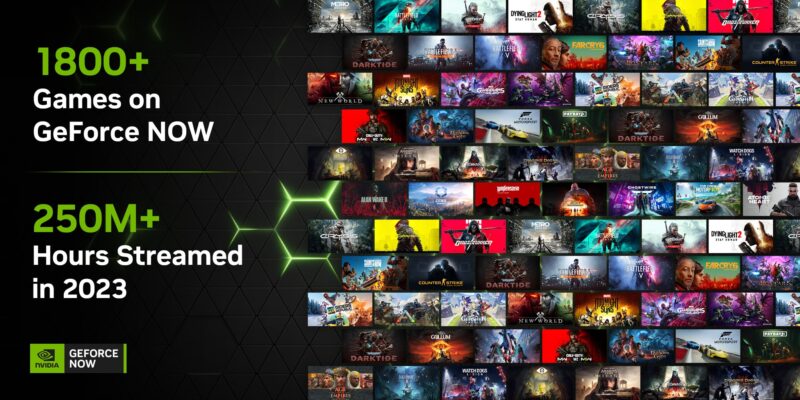
Painstaking Re-Additions: A library now exceeding 1,800 supported games.
This period taught NVIDIA that cloud gaming is as much about content diplomacy as it is about bandwidth.
The Killer Apps – Titles That Defined the Platform
Certain games have been instrumental in proving GeForce Now’s value, each serving a unique purpose:
Cyberpunk 2077 (The Savior): When it launched unplayably on last-gen consoles, GeForce Now became the definitive way to experience it with ray tracing. It was the ultimate “proof-of-concept” for cloud utility.
Fortnite & Destiny 2 (The Engagement Engines): These free-to-play giants drive daily logins across devices, especially on Macs, Chromebooks, and mobile via browser, showcasing accessibility.
Microsoft Flight Simulator & Alan Wake 2 (The Tech Showpieces): These titles serve as breathtaking advertisements, demonstrating GeForce Now’s ability to run software that cripples all but the most expensive local hardware.
The Catalog Deals (The Legitimizers): Xbox Game Pass and EA Play integration transformed GeForce Now from a niche tech demo into a mainstream gaming utility.
The Business Model Tightrope – Pricing, Tiers, and Strategic Losses
GeForce Now walks a fine financial line. Its Free Tier acts as a powerful funnel, while its Priority and Ultimate (RTX 4080) tiers represent a premium value proposition. However, the economics are daunting.
The infrastructure costs—bleeding-edge server GPUs refreshed every few years, global data center colocation, and massive energy consumption—almost certainly outpace subscription revenue. Analysts estimate GeForce Now operates at a loss, a strategic investment NVIDIA sustains. This positions GeForce Now not as a profit center, but as a loss-leading ecosystem driver, akin to Amazon’s early investment in AWS.
The Invisible Hand – GeForce Now’s Role in NVIDIA’s Market Valuation
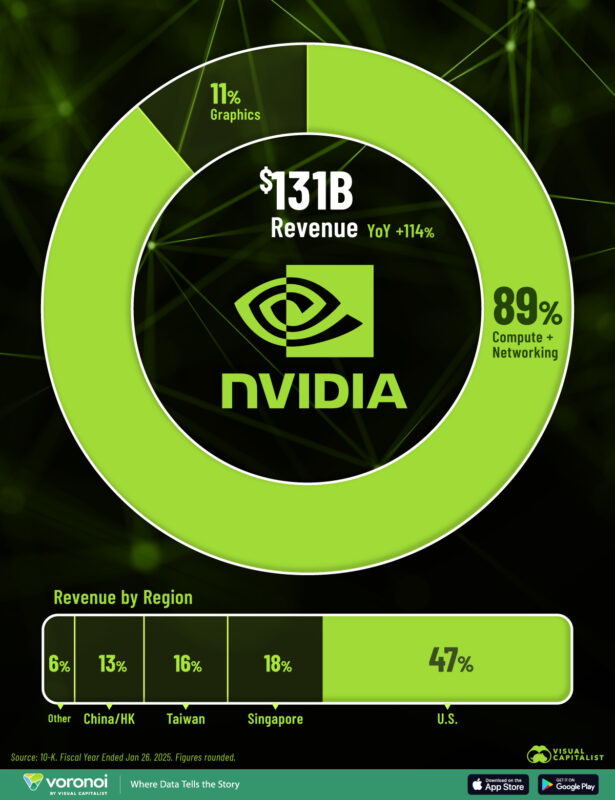
While GeForce Now revenue is immaterial to NVIDIA’s $60+ billion annual income, its strategic contribution to the company’s premium market valuation is profound. It supports the investor narrative in critical ways:
Total Addressable Market (TAM) Expansion: It allows NVIDIA to monetize gamers on non-GPU devices (Macs, tablets, TVs), telling a growth story beyond discrete GPU sales.
Ecosystem Moat Strengthening: It increases user lock-in. A gamer invested in a Steam library streamed via GeForce Now is deeply embedded in the NVIDIA ecosystem, reducing switching risk.
Data Center R&D Testbed: The SuperPODs serve as a real-world proving ground for GPU virtualization and orchestration software, technologies that directly benefit and de-risk NVIDIA’s core Data Center segment.
Anti-Cyclical Hedge: During the GPU shortage (2020-2022), GeForce Now retained gamers within the NVIDIA ecosystem when they couldn’t buy hardware, protecting brand loyalty.
In essence, GeForce Now is a pillar in the story of NVIDIA as a resilient, ecosystem-driven platform company—a narrative that commands a trillion-dollar market cap.
The Unfinished Map – Latency, Geography, and Future Frontiers
GeForce Now’s biggest remaining challenge is physics: the speed of light. Performance is inextricably linked to proximity to an NVIDIA data center. This creates a “geographic lottery” where users in well-served regions (North America, Western Europe) enjoy a flawless experience, while others face insurmountable lag.
The future growth of GeForce Now depends on:
Global Infrastructure Expansion: Costly but necessary build-outs in South America, Southeast Asia, and Oceania.
Beyond Gaming: Formalizing its role as a cloud platform for AI-assisted creative work in apps like Blender and DaVinci Resolve.
Seamless Convergence: Further blurring the lines between local and cloud gaming, perhaps with hybrid rendering or save-state synchronization across all devices.
More Than a Service – A Strategic Nervous System
After six years, GeForce Now has transcended its identity as a mere cloud gaming service. It has become a strategic nervous system for NVIDIA’s gaming division—a flexible, cloud-based layer that enhances, protects, and extends the reach of the GeForce ecosystem.
It proved that the “Netflix of Games” model was not the only path, that respecting gamers’ existing investments was a powerful philosophy. It weathered licensing armageddon and emerged with key publisher partnerships. And while it may not directly move NVIDIA’s earnings per share, it substantively supports the broader, future-facing vision that investors value so highly.
GeForce Now is no longer a question of “if” cloud gaming works, but a demonstration of how it can work at its highest fidelity. Its next six years will be about moving from a strategic bet to a sustainable, global utility, further solidifying NVIDIA’s dominance from the silicon up through the cloud.
The Stealth Architect of a Broader Thesis
GeForce Now has not been a direct engine of NVIDIA’s stock price appreciation. You will not find a hedge fund pitch that says, “Buy NVDA because of its cloud gaming service.”
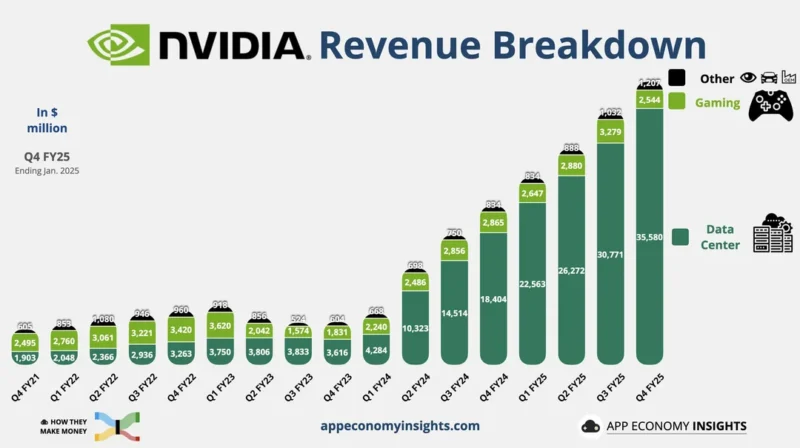
However, as a strategic, ecosystem-deepening, and future-proofing venture, GeForce Now has played a vital supporting role in the larger narrative that has driven NVIDIA’s historic valuation surge. It has:
Protected the core GeForce brand during critical shortages.
Acted as an R&D feeder for the all-important Data Center division.
Expanded the serviceable market and strengthened the ecosystem moat.
Bolstered the image of innovative execution for which investors pay a premium.
In the grand calculus of a $2 trillion company, GeForce Now is a single, strategic variable. Its true value isn’t measured in quarterly subscription revenue, but in its contribution to the perception of NVIDIA as an inevitable, integrated, and indispensable force in the future of computing—a perception worth trillions.


