Fellowship Entertainment stock began trading under a new name on April 1, 2026. The ticker remains EMBRAC-B on Nasdaq Stockholm. The stock remains near 48.95 SEK — down more than 94% from its all-time high of 808 SEK in May 2021. A new logo does not move markets. But the structural question behind this rebrand is one that every investor tracking this company needs to answer before the May 20 earnings report: has anything actually changed?
The short answer is: yes, quite a lot has changed — just not in the way management’s press releases suggest. The earnings quality of the remaining listed entity is materially weaker than it was twelve months ago. The margin engine has been spun off.
One AAA title has slipped a full fiscal year. And the company’s most senior studio leadership at Eidos Montreal has walked out the door after three rounds of cuts. The rebrand to Fellowship Entertainment is a narrative event, not a financial one. Investors should treat it as such.
What the Rebrand Actually Is — And Who Still Controls Everything
To understand what Fellowship Entertainment is, you first need to understand what was carved out before the rename arrived. Embracer Group spent the better part of two years systematically dismantling the conglomerate it spent five years assembling.
The first entity to go was Asmodee, the tabletop gaming division, which was separated in February 2025 and loaded with debt in the process. Then came the Coffee Stain Group spin-off in December 2025, distributing shares in the indie publisher to existing Embracer shareholders and listing Coffee Stain on Nasdaq First North Premier Growth Market. What remained was rechristened Fellowship Entertainment.
Critically, Lars Wingefors — the architect of Embracer’s acquisition era and, by extension, the restructuring that followed — did not step aside. He established a privately held company called Embracer AB, which now acts as the controlling shareholder across all three entities: Asmodee, Coffee Stain Group, and Fellowship Entertainment. The man who built the empire retains voting control over the ruins. That detail is absent from most rebrand coverage and directly relevant to any investment thesis.
Fellowship Entertainment (EMBRAC-B) — Key Metrics at Rebrand
| Stock Price (Apr 5, 2026) | 48.95 SEK |
| 52-Week Range | 43.00 – 128.88 SEK |
| All-Time High | 808.20 SEK (May 2021) |
| Market Cap | ~10.93B SEK (~$1.67B USD) |
| Market Cap 1-Year Change | -52.28% |
| Trailing P/E | ~2.57x |
| EBITDA Margin (TTM) | ~20% |
| Analyst Avg. Price Target | 75.56 SEK (High: 90 / Low: 52) |
| Analyst Ratings | 5 Buy | 0 Sell |
| Next Earnings | May 20, 2026 |
| Dividend | None |
Source: Investing.com, TradingView | PressPlayFinance.com
What Was Stripped Out: The Coffee Stain Problem
This is the section of the rebrand story that has received almost no rigorous financial coverage, and it is the most important one for anyone analysing Fellowship Entertainment stock on a forward basis.
Coffee Stain Group was not merely a collection of indie titles. In FY 2024/25, it generated net sales of approximately SEK 1,089 million with an adjusted EBIT of SEK 544 million — representing an EBIT margin of roughly 50%. That is an extraordinary margin profile for a gaming business, driven by evergreen titles like Deep Rock Galactic, Satisfactory, Valheim and Goat Simulator that require minimal ongoing marketing spend and generate reliable long-tail revenue.
That business is now a separately listed entity. Fellowship Entertainment shareholders received Coffee Stain shares as a Lex ASEA dividend distribution — which means the capital returned to them, but the earnings power no longer sits inside EMBRAC-B. Any investor comparing Fellowship Entertainment’s current valuation multiples against historical Embracer Group consolidated figures is making a like-for-like error. The denominator has fundamentally changed.
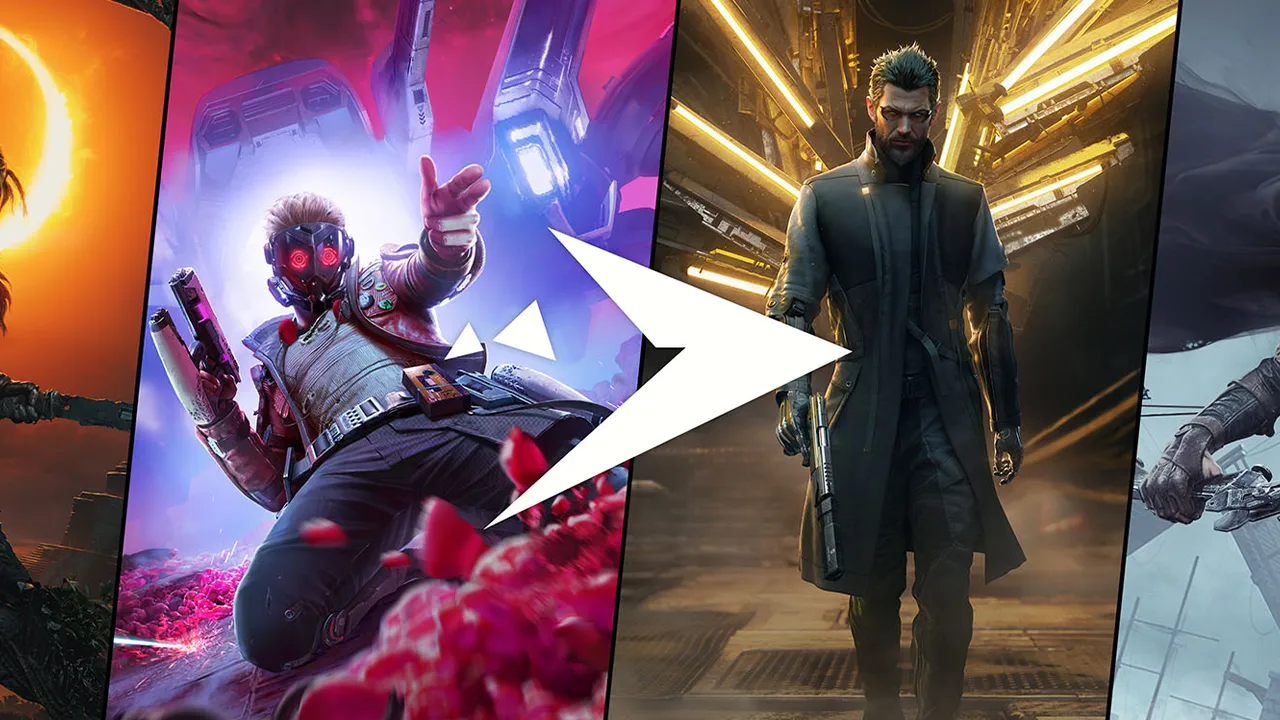
What Fellowship Entertainment retains is the AAA-facing business: Crystal Dynamics (Tomb Raider), Eidos Montreal, 4A Games (Metro series), THQ Nordic, Warhammer studios, Killing Floor franchise, and the crown jewel that gives the new entity its name — the commercial rights to J.R.R. Tolkien’s The Lord of the Rings and The Hobbit. That is a high-variance IP portfolio. High upside if the AAA pipeline delivers. Structurally impaired if it doesn’t.
The LOTR Bet: $395 Million for Middle-earth’s Commercial Rights
The Fellowship Entertainment rebrand is not accidental. It is a deliberate investor communication: this company’s long-term value thesis is anchored to its stewardship of J.R.R. Tolkien’s intellectual property, acquired for approximately $395 million. That purchase now anchors the entire identity of the listed entity.
The transmedia opportunity is real. Fellowship Entertainment controls licensing across video games, merchandise, film, comics and theme experiences through Middle-earth Enterprises. The Amazon Games Lord of the Rings MMORPG in development is a material royalty catalyst if it launches successfully — a significant ‘if’ given Amazon’s track record with New World. Kingdom Come: Deliverance II has already demonstrated the pipeline can deliver, reaching 4 million units sold ahead of schedule.
The risk is concentration. If LOTR gaming titles underperform, or the Amazon MMO is delayed or cancelled, Fellowship Entertainment’s entire re-rating thesis collapses back to a distressed Swedish gaming holdco trading at a 2.57x trailing P/E because the market refuses to assign growth multiple to a business that has not yet proven it can grow.
Eidos Montreal: The Cost-Cut Trap Continues Under the New Name
Whatever the entity is called, Eidos Montreal remains Exhibit A in the Fellowship Entertainment bear case. The studio has now endured three rounds of cuts since January 2024, eliminating approximately 300 roles in total — including the departure of studio head David Anfossi after nearly two decades. The March 2026 round alone removed 124 employees following the cancellation of an unannounced project.
The market’s concern is not the headcount reduction itself — cost discipline is broadly the right response to Embracer’s overexpansion. The concern is what the cuts signal about pipeline visibility. A studio that has lost 300 people and its founding leadership in two years is not the same creative organisation that produced Deus Ex: Mankind Divided or the Shadow of the Tomb Raider contributions. The IP is owned. The institutional knowledge to execute on it is increasingly dispersed.
This matters directly for Fellowship Entertainment stock because the sell-side price targets — averaging 75.56 SEK — are built on AAA release assumptions. Killing Floor 3 already underperformed expectations in Q2 FY25/26. A confirmed AAA title has slipped from FY25/26 into FY26/27. If Crystal Dynamics or Eidos Montreal’s next major release disappoints commercially, the 62% implied upside in analyst consensus becomes arithmetically unsustainable.
Reddit vs. Analysts: The Credibility Gap Nobody Is Closing
The gap between institutional analyst coverage and retail/community sentiment on this company is arguably wider than for any other publicly listed gaming entity right now. Sell-side consensus sits at 5 buys and zero sell recommendations, with an average price target implying 54% upside from current levels. The gaming community’s verdict is rather more direct: rebranding is characterised across forums as cosmetic damage control for a company that destroyed thousands of developer careers through reckless capital allocation.
Both perspectives contain truth. The balance sheet is genuinely cleaner after asset sales and the Easybrain divestiture. The net cash position provides a real floor. But the structural discount the market applies to Fellowship Entertainment at 2.57x trailing P/E is not irrational — it reflects justified scepticism about whether the management team that created this problem can credibly execute the solution.
Lars Wingefors controls the entity through Embracer AB. The same leadership philosophy that approved the Savvy Games deal, the $2 billion acquisition binge, and the subsequent 4,500 layoffs now steers a leaner vehicle toward a LOTR-anchored IP strategy. Investors are being asked to extend trust that has not yet been re-earned. The May 20 earnings call is the first genuine opportunity to begin changing that narrative.
Does the Fellowship Entertainment Stock Thesis Actually Change?
Three Scenarios Heading Into May 20
| Scenario | Key Trigger | Target Range |
| Bull Case | Clear AAA pipeline delivery schedule; LOTR transmedia deal announced; free cash flow positive guidance for FY26/27; May 20 EPS beat with revenue growth, not just cost cuts | 75–90 SEK |
| Base Case | Pipeline commentary is vague; revenue down YoY but EBITDA holds; no new strategic partnerships announced; market maintains current discount | 48–58 SEK |
| Bear Case | Further AAA delays confirmed; Eidos Montreal or Crystal Dynamics announce additional cuts; revenue miss AND earnings miss on May 20; stock tests 52-week low | 35–43 SEK |
Source: PressPlayFinance.com analysis
Investor Takeaway: HOLD — Wait for Pipeline Proof, Not Just a New Logo
Fellowship Entertainment stock at 48.95 SEK reflects a market that has heard the restructuring story before and is demanding evidence, not narrative. The rebrand is a signal about strategic intent — LOTR as the core identity, IP licensing as the long-term value driver, transmedia expansion as the growth thesis. None of that is irrational. But none of it is priced into reality yet.
The Coffee Stain spin-off stripped out the most reliable margin business inside the old Embracer Group. What remains is a high-variance AAA portfolio with a damaged studio pipeline, a controlling shareholder who has not yet demonstrably changed the operating philosophy, and a community credibility deficit that no rebrand can resolve overnight.
Our rating remains HOLD. The upgrade trigger is simple: a credible AAA release calendar on May 20 that demonstrates pipeline intact — not just cost metrics — alongside any LOTR transmedia monetisation update that moves from promise to contract. The downside trigger is a further pipeline slip or a revenue miss that reveals the cost-cut EBITDA improvement has masked underlying commercial deterioration.
May 20 is the first real test of whether Fellowship Entertainment is a company with a thesis, or a rebrand in search of one.
Disclosure: This article is for informational purposes only and does not constitute financial advice. PressPlayFinance.com does not hold positions in any securities mentioned.